


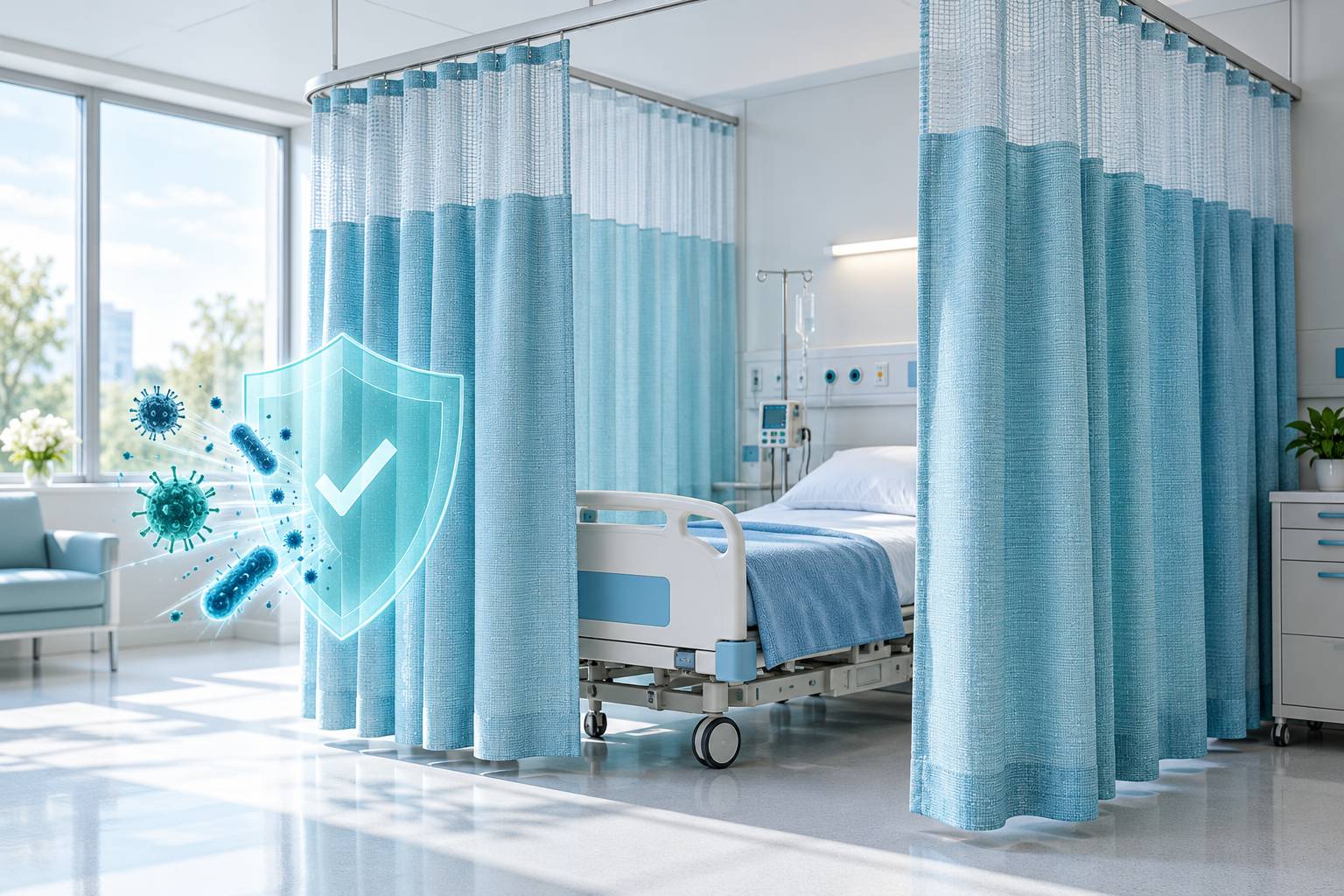
Antibacterial Hospital Curtains
Antibacterial Hospital Curtains: Features, Applications, and Key Buying Considerations Hospital curtains are widely used in healthcare facilities to protect patient privacy and separate bed spaces. These curtains are frequently touched by patients, visitors, and staff throughout the day, making suitable fabric selection and easy cleaning and replacement particularly important. Antibacterial hospital curtains are made from fabrics treated or manufactured to inhibit bacterial growth. Alongside proper washing and compliance with the healthcare facility’s hygiene procedures, this feature can support better curtain hygiene. What Are Antibacterial Hospital Curtains? Antibacterial hospital curtains are made from fabrics treated with specific substances or processes to reduce bacterial growth or activity on the fabric surface. Their performance should be evaluated using a valid test report that supports the manufacturer’s claims. An antibacterial curtain is not necessarily sterile. Its antibacterial properties do not replace washing, approved disinfection procedures, or timely replacement. The effectiveness and durability of these properties depend on the technology used, conditions of use, and maintenance practices. Why Is Choosing the Right Hospital Curtain Important? In addition to protecting patient privacy, bedside curtains must withstand frequent use and the healthcare facility’s cleaning procedures. Curtains that are difficult to open and close or time-consuming to replace can complicate routine maintenance. When choosing hospital curtains, several features should be assessed together: - Fabric quality and specifications - Documentation supporting antibacterial performance - Washability and care requirements - Strength of stitching and attachments - Smooth movement along the track - Ease of removal and reinstallation - Adequate opacity to protect patient privacy
Key Features of Antibacterial Hospital Curtains 1. Documented Antibacterial Performance Simply labeling a fabric “antibacterial” or “nano” is not enough to assess its quality. Before purchasing, review the test report for the specific fabric to identify the testing method, bacterial strains tested, and performance results. If antibacterial durability after washing is claimed, this should be supported by separate documentation or test results obtained after a specified number of wash cycles. 2. Washability and Proper Maintenance Hospital curtains should be compatible with the healthcare facility’s cleaning procedures. The supplier should specify the permitted washing temperature, suitable detergents, compatible disinfectants, and drying method. Using unsuitable chemicals or temperatures above the recommended limit may damage the fabric structure, color, stitching, or antibacterial finish. 3. Opacity and Patient Privacy One of the main purposes of hospital curtains is to provide privacy during examinations, rest, and patient care. Fabric density, thickness, and color should be selected to ensure adequate opacity under normal ward lighting. Curtain dimensions should also be determined according to the installation height, track layout, and required coverage around the bed. 4. Durable Stitching and Suitable Attachments High-quality fabric performs best when the stitching and attachments are also suitable for hospital use. The curtain’s header tape, ring attachment points, and hems should be strong enough to withstand pulling and frequent opening and closing. Consistent stitching and reinforcement at high-stress points help maintain the curtain’s shape and extend its service life. 5. Easy Curtain Replacement Ease of removal is an important consideration when selecting a curtain installation system. The simpler the removal and reinstallation process, the easier it is for staff to follow washing and replacement schedules. In easy-release models, the track and ring design allows the curtain to be detached without dismantling the entire track. When selecting these models, the rings, header tape, and track should be assessed together as a compatible system.